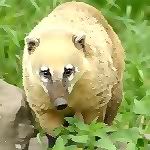
in the zoo of Krefeld. I saw three of them in two enclosures - according to ISIS * they´ve got two males and two females.
I really like beautiful (and imho slightly weird) animals, saw them in Frankfurt Zoo and their relatives, Matschies Tree Kangaroos (Dendrolagus matschiei), in Duisburg.
* For those who don´t know it:
Isis (International Species Information System ) is "
a non-profit organization that maintains computer-based information systems used by the worldwide zoological community. ISIS members use the basic biologic information (age, sex, parentage, place of birth, circumstance of death, etc.) collected in the ISIS system to manage genetic and demographic programs for their animal collections.[...]The ISIS central database contains information on 2 million animals – almost 15,000 taxa/10,000 species – held in zoological institutions, and some animals in the wild."
So, if you want to see for example Pallas Long-tongued bats in captivity, you go to the ISIS site, choose "animals" and "find animals". Then you choose "Mammalia" (mammals, you might have guessed), and either common or taxonmic (scientific, latin) name.
I recommend always using the taxonomic name, they´re much more helpful and precise.
If you don´t know them, use the
Integrated Taxonomic System (ITIS, its a nice database) or just type the common name into google.
So you end up with "glossophaga soricina" and look for that on ISIS under G.
You´ll be shown a list of institutions keeping them and one of the places is the Zoo Krefeld.
Don´t rely on that information though!!!
The database is neither complete nor always up to date.
For example it shows only 16 institutions keeping Nutrias/coypus (Myocastor coypus) for example, which is ridiculously low.
They´re usually much better with rare species than with common ones - which makes sense if you´re mainly interested in managing zoo-populations.


 You do not need to be by the sea to experience tawdry sunsets. The lowland will do, too.


 Weißgesichtssaki - White Faced Saki /Guianan Saki - Pithecia pithecia (Linnaeus, 1766)


 Schneeleopard / Irbis - Snow Leopard - Uncia uncia (Schreber, 1775)

 Löffelhund - Bat-eared Fox - Otocyon megalotis (Desmarest, 1822)
 Europäischer Fischotter - European Otter - Lutra Lutra

 Ypecha Ralle - Ypecha Wood Rail /Giant Wood Rail - Aramides ypecaha (Vieillot, 1819)
  Guess...
 Hyazinth-Ara - Hyazinth Macaw - Anodorhynchus hyacinthinus (Latham, 1790)
 Barbirusa /Hirscheber - Barbirusa - Babyrousa babyrussa (Linnaeus, 1758)
 Blauducker - Blue duiker - Cephalophus monticola (Thunberg, 1789)
 Gepard - Cheetah - Acinonyx jubatus (Schreber, 1775)